
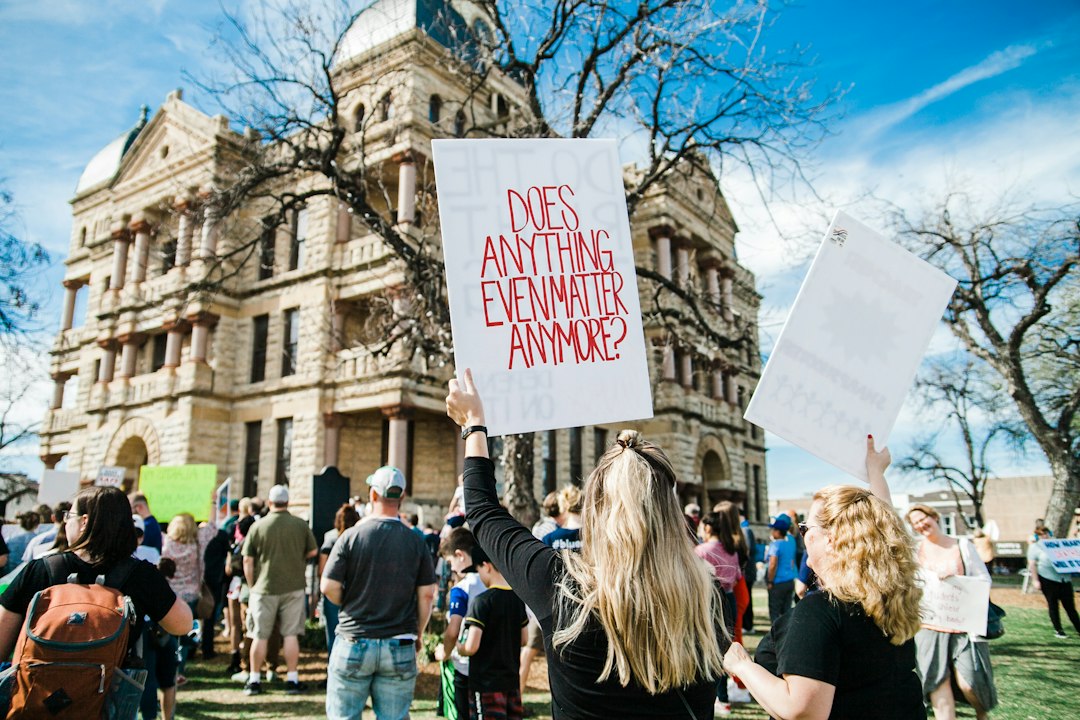
Marta is thirty four years old, teaches primary school in the Eixample district of Barcelona, and has changed address four times in five years. The rent on her small shared flat has climbed from six hundred and fifty euros a month to nine hundred and fifty, while her salary has barely moved. Her story is not unusual. It is the story of a whole generation in Spain that has watched the price of a roof over its head detach itself from the reality of a payslip. In the final days of September 2026 that private anxiety exploded into the loudest political fight in the country.
Within hours the single Spanish word vivienda, which simply means housing, became one of the most searched terms in Spain. Behind that surge sat a dense knot of political stories: a housing decree waiting for a knife edge vote in the Congress of Deputies, the Catalan party Junts per Catalunya deciding whether to keep the government standing, and a rising tide of speculation about early elecciones generales. What began as a technical parliamentary procedure turned into a national referendum on who really controls the price of a home.

Why Housing Became Spain’s Political Fault Line
Spain has transformed itself faster than almost any other European economy. Cities that once welcomed young workers with affordable flats now compete for space with millions of visitors every year. Rents in Madrid and Barcelona have roughly doubled in a decade, and in coastal regions such as the Balearic Islands and the Canary Islands the pressure is even sharper. Wages, meanwhile, grew slowly, and the gap between what a household earns and what a landlord asks has become the defining economic grievance of the decade.
The roots run deep. The construction boom collapsed after 2008 and the pipeline of new homes never fully recovered, so supply lags behind demand in every major city. Interest rate increases pushed mortgages out of reach for many first time buyers, which pushed more people into the rental market and pushed rents higher still. Public housing is scarce, at roughly two and a half percent of the total housing stock compared with a European average closer to nine percent. Add short term holiday rentals, investor purchases and a tourism industry that never really stopped, and you get a market in which a schoolteacher can outbid nobody.
What Exactly Is Inside the Housing Decree
The instrument at the centre of the storm is a royal decree law, an emergency measure approved by the Council of Ministers that takes effect immediately but must be validated by the Congress of Deputies within thirty days. If the chamber rejects it, the decree falls and the rules it introduced disappear with it. The government argues that speed is essential because the rental market moves faster than parliament, while critics on the right and parts of the centre dismiss it as a decretazo, a blunt instrument that avoids proper debate.
Inside the text is a package designed to hit several pressure points at once. Rent updates are tied to a new and less generous index, with clear limits on annual increases inside declared stressed areas. Regions are given the power to declare stressed housing zones where rent caps and extraordinary extension rules apply. New rules on tourist flats require proof that a short term rental complies with local planning and treat it as an economic activity rather than a private arrangement. Tax measures target large property holders and non resident buyers from outside the European Union, including a proposal for a full one hundred percent levy on such purchases. Stronger protections for vulnerable households facing eviction are paired with faster procedures to move social housing onto public land.
Supporters describe the decree as the first serious attempt to stop housing from becoming a financial asset first and a home second. Opponents call it a tax on ownership that will freeze the rental market and push small landlords to sell. Both sides agree on one thing: the text is short, the consequences are not.

The Congress of Deputies and the Arithmetic of Survival
The Congress of Deputies has three hundred and fifty seats, and a majority requires one hundred and seventy six votes. The governing coalition of the Socialists and Sumar does not have that number on its own, which means every decree becomes a negotiation. Regional parties hold the balance, and this time the balance rests with seven deputies from Junts per Catalunya.
That is why a housing policy debate turned into a parliamentary thriller. A yes vote keeps the decree alive and hands the government breathing space. A no vote kills the package, embarrasses the executive and opens the door to a confidence crisis. In the corridors of the lower house, the language of rent caps and tourist licences sits alongside talk of budgets, amendments and abstentions.
Junts per Catalunya, the Party That Decides
Junts per Catalunya is a pro independence party born from the Catalan political earthquake of the last decade and led by Carles Puigdemont from Belgium. Its seven seats make it a permanent hinge in Spanish politics, small enough to be ignored in a landslide but large enough to topple a government in a divided chamber. When the party hinted that its support for the housing decree was not automatic, the phrase junts decreto vivienda raced through search feeds and social timelines.
The party’s demands are rarely about a single law. Its negotiators bundle housing with questions of fiscal autonomy for Catalonia, the transfer of immigration powers, protections for the Catalan language and the recognition of a mediating figure in the long running dispute over independence. For its base, backing a Spanish government is always costly, so every vote must be paid for in political currency. For its opponents, that is simple opportunism. For its strategists, it is the only leverage a small party has.
Housing itself is not an abstract issue in Catalonia. Barcelona is one of the most expensive rental markets in southern Europe, and eviction cases and squatting disputes make headlines every week. Junts has to balance its pro market instincts with the anger of younger voters locked out of the market, which is why the party has pushed for amendments that give the region more control over rent rules rather than simply waving the decree through. The calculation is delicate: vote yes and be accused of saving a Spanish government, vote no and be accused of killing a law that helps Catalan tenants.
The Election Question Nobody Can Ignore
Every difficult vote in Madrid now carries an implicit question. Are we heading to the polls? Searches for elecciones generales españa spiked for exactly that reason. If the decree collapses, the government faces a choice between trying again with a fresh text, seeking a confidence vote or calling a general election earlier than planned. Each option carries risks in a parliament where no bloc commands a stable majority.
Polling suggests a fragmented landscape: the conservative opposition strong but short of a majority, the far right holding the keys on one side, and the left fighting to defend a record it says protected workers and tenants. In that environment, the housing decree becomes a campaign document as much as a law, a way for each side to tell voters where it stands on the issue that increasingly decides elections in modern Spain. Municipal and regional elections add further noise, because housing policy is delivered locally and mayors pay the price when anger rises.
Who Wins and Who Loses
For tenants, the decree offers something rare: predictability. A capped annual increase and the possibility of rent reductions in stressed areas matter enormously to a family spending half its income on rent. For small landlords, the picture is messier. Many say they are being punished for the behaviour of large funds and tourism operators, and warn that tighter rules will scare off the private investment that funds rental supply.
For foreign buyers, the proposed levy on purchases by non residents outside the European Union is a direct deterrent. Supporters say it protects local buyers in coastal and city hotspots. Critics argue it will chill a segment of the market without adding a single affordable home. Estate agents, developers and tourism associations are all recalibrating, and construction companies are watching to see whether the promised push for public housing actually materialises in cranes and concrete.
Analysts agree on one point: no single measure fixes a shortage. Rent controls can ease pain in the short run, but only building more homes, faster and in the right places, changes the equation. The decree is therefore best understood as a political statement about fairness, wrapped in a technical text about indices, licences and taxes.
What Happens Next
The immediate calendar is tight. The Congress must validate the decree or it lapses, and the amendments negotiated with Junts per Catalunya and other allies will determine the final shape of the rules. Regions that plan to declare stressed zones are already preparing the paperwork, while landlords and rental platforms study the fine print. Legal challenges are likely, particularly over the taxation of foreign buyers. Meanwhile the broader political clock keeps ticking, and every negotiation inside the chamber doubles as a rehearsal for a possible election campaign.
Housing, the Word That Defines a Decade
Marta will not be watching the vote in the Congress of Deputies with the detachment of a political analyst. She will be watching it the way millions of Spaniards are watching it, as something that decides whether she can stay in the city she grew up in. That is the real reason a single word, vivienda, outshone every celebrity story and football result this autumn. Housing has stopped being a chapter of economic policy and become the emotional centre of Spanish public life.
For anyone trying to reach an audience in Spain, the lesson is clear. The story is not the search spike. The story is the family, the decree, the negotiation in the Congress of Deputies and the question of whether a party of seven deputies can write the rules of the rental market for forty eight million people. Follow the vote, follow the amendments, and follow the money. The word vivienda will keep returning, because it is the question Spain cannot stop asking.

