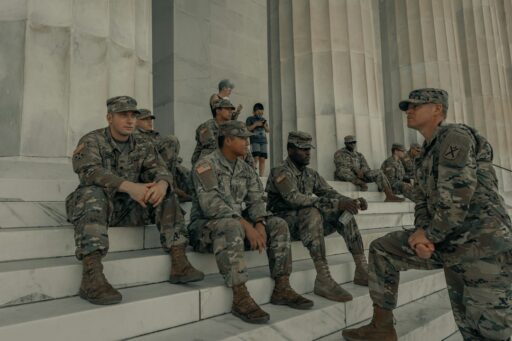

On a still November afternoon in 2009, the ordinary rhythm of Fort Hood, one of the largest military bases in the United States, was torn apart by the crack of gunfire. Soldiers who had survived battles overseas suddenly found themselves fighting for their lives on American soil. When the shooting stopped, thirteen people were dead and dozens more were wounded. The man who pulled the trigger was not a stranger. He was one of their own, a United States Army major and psychiatrist named Nidal Hasan.
For more than a decade, that name has lived in the darkest chapters of American military history. Now it is surging across search engines once again, and the reason comes down to one grim phrase. Firing squad execution. Millions of people are asking the same questions at once. Who is Nidal Hasan? What happened at Fort Hood? And could the Fort Hood shooter truly be executed by firing squad inside the United States?

The story of Nidal Hasan is not just a story about a single man. It is a story about a system, a community, and a country that was forced to look at itself in the mirror. To understand why his name is commanding so much attention now, you have to understand the day that made him infamous, the trial that condemned him, and the long and painful road that has led back to the question of his execution.
Who Is Nidal Hasan
Nidal Malik Hasan was born in the United States and grew up with the ordinary ambitions of a young man who wanted to serve. He joined the military, trained as a psychiatrist, and climbed to the rank of major in the Army. On paper, he was a healer, a doctor trusted with the mental well being of soldiers preparing to deploy. That is exactly what makes his story so chilling. The person the system relied on to protect lives became the person who ended them.
His name became shorthand for betrayal. The word Hasan, once just a surname, became linked in the public mind with the worst kind of violence, the kind committed by someone who was supposed to protect. That is part of why the case never truly disappeared from American memory, even during the years when it rarely made headlines.
Friends and colleagues later described a man who grew increasingly isolated and outspoken in the months leading up to the attack. The warning signs were there, scattered like breadcrumbs, but no one connected them in time. That failure haunted military leaders for years and sparked reforms that are still debated today.
What Happened at Fort Hood in 2009
On November 5, 2009, Hasan walked into a deployment processing center at Fort Hood in Killeen, Texas. According to the official account, he drew a handgun and opened fire on unarmed soldiers and civilians. The scene was chaos. Men and women in uniform who had braced for combat abroad were suddenly facing death in a place they believed was safe.
When the rampage ended, thirteen people were dead and more than thirty were wounded. The 2009 Fort Hood shooting became one of the deadliest mass shootings ever carried out on a United States military installation. It shattered families, scarred survivors, and forced the nation to ask uncomfortable questions about security, loyalty, and who the military trusts with its most vulnerable members.

The survivors carried scars both visible and invisible. Some never returned to service. Others fought to rebuild their lives while carrying the weight of that afternoon. The attack also changed how the military approached security on its own bases, a place where weapons and trust have always walked a delicate line. Many bases tightened screening and reviewed how they handled warning signs in the ranks.
The Trial and the Death Sentence
Hasan was captured and eventually brought to trial. In 2013, a military court convicted him of thirteen counts of premeditated murder and dozens of counts of attempted murder. He was sentenced to death. Since then, he has remained on military death row, sitting in a cell while the nation argued about whether the sentence would ever be carried out.
For years, that argument stayed quiet. Military executions are extraordinarily rare in the United States, and the country had not carried one out in decades. Hasan remained a name associated with the past, a grim footnote in military history. That is why the sudden return of his name to the top of search trends caught so many people off guard.
The Survivors and the Families
Behind every headline about the Fort Hood shooter execution sits a family that lost someone. Parents who sent a child to serve. Spouses who waited for a call that never came. Children who grew up without a parent. For them, the trial was not a spectacle. It was a wound reopened in public, day after day.
When talk of the firing squad returned, those families found themselves in the spotlight again. Some welcomed the possibility of a sentence finally carried out. Others simply wanted the world to remember the people they lost, not only the man who took them. Their voices are the heart of this story, and they deserve to be heard above the noise.
Why the Firing Squad Question Returned
The spark came from Washington. Conversations about the Fort Hood shooter execution and the Nidal Hasan execution date suddenly resurfaced as officials debated how and whether to carry out the sentence. Among the methods discussed was the firing squad, a form of death by firing squad that most Americans associate with a distant past rather than a modern courtroom.
The phrase public execution in the USA began to trend alongside his name, feeding a larger debate about capital punishment, transparency, and the ethics of how a state takes a life. Supporters of the firing squad argue it is swift and certain. Opponents argue it is brutal and ancient, a return to a form of killing the modern world tried to leave behind.
Hegseth, the Pentagon, and a New Debate
The conversation grew louder when Pete Hegseth, a prominent voice in defense politics, became linked to the discussion. Search terms like Hegseth firing squad and Pete Hegseth firing squad exploded as people tried to understand his position and what it could mean for the case of Nidal Hasan. The Pentagon suddenly found itself in the center of a debate it rarely has to confront in public.
Defense officials have been careful with their words, aware that every statement will be scrutinized. The Pentagon rarely comments on individual capital cases, but when a figure like Pete Hegseth speaks about the firing squad, the silence breaks. Suddenly, a legal procedure that few Americans understood became a topic of dinner table conversation from coast to coast.
The revival of interest in the Fort Hood shooter execution turned a quiet legal matter into a national conversation. Everyone from veterans to legal scholars to ordinary citizens began weighing in. Some see the case as a matter of justice finally being served. Others see it as a moment to reflect on whether the death penalty, in any form, still belongs in a modern society. What no one can deny is that the case has become a lightning rod for a country that remains deeply divided over punishment and mercy.
Where Is Fort Hood Today
Fort Hood, officially renamed Fort Cavazos in recent years, remains one of the largest military bases in the United States. It sits in Killeen, Texas, and it continues to send soldiers around the world. For many, it is simply a place where young Americans train and deploy. For the families touched by the 2009 shooting, it is also a place of memory, a site where ordinary people lost loved ones to an extraordinary act of violence.
The Bigger Argument About Executions
Execution by firing squad in the US is a phrase that once belonged to history books. A small number of states have used it as an alternative method, while the military maintains its own rules for capital cases. The renewed focus on the Nidal Hasan case has dragged that obscure debate into the mainstream, forcing ordinary people to think about something they would rather ignore.
America has always had a complicated relationship with the death penalty. Some states have abolished it. Others continue to carry out executions. The military has its own separate system, used only in the most serious cases. The renewed focus on Nidal Hasan has pulled that quiet system into the light.
Supporters argue that some crimes are so severe that only death can answer them. Opponents argue that the state should not kill, no matter the crime. The debate over the firing squad adds yet another layer, raising questions about dignity, pain, and the methods a nation is willing to use.
The story also raises hard questions about the death penalty itself. Does a punishment that unfolds in public serve justice, or does it simply create another spectacle? Should the state make an example of a man like Hasan, or should his fate remain hidden behind prison walls? These are not easy questions, and there are no easy answers.
A Story That Refuses to End
The Fort Hood shooting is a wound that never fully healed, and the man behind it remains a symbol of everything that went wrong on a single November day. The renewed push to carry out the Fort Hood shooter execution has brought the families of the victims, the survivors, and the entire nation back to that terrible moment.
Whether the sentence is ever carried out, and whether the firing squad becomes the chosen method, the debate itself matters. It forces America to confront what it believes about justice, about punishment, and about the value of human life, even the life of a man who took so many others.
Conclusion
The name Nidal Hasan will always be tied to Fort Hood, to thirteen lives cut short, and to a nation still wrestling with what justice should look like. As searches for the Nidal Hasan execution date and the firing squad execution climb, one truth stands out. The country has not stopped thinking about what happened that day, and it has not stopped arguing about what should come next.
For the families who lost someone, the wait for closure has been long and painful. For everyone else, the case is a reminder that history does not simply fade away. It returns, again and again, asking us to decide what kind of country we want to be. That is why the story of the Fort Hood shooter, and the question of the firing squad, will keep finding its way back onto our screens and into our hearts. Justice, after all, is never as simple as the sound of a single shot.