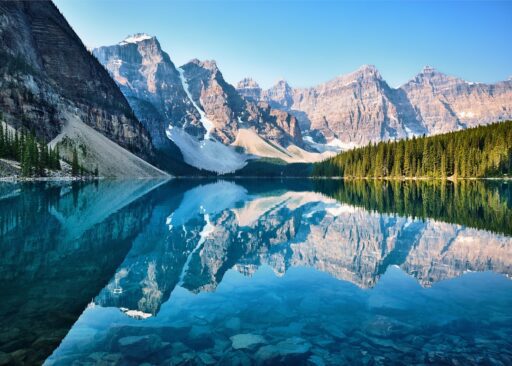
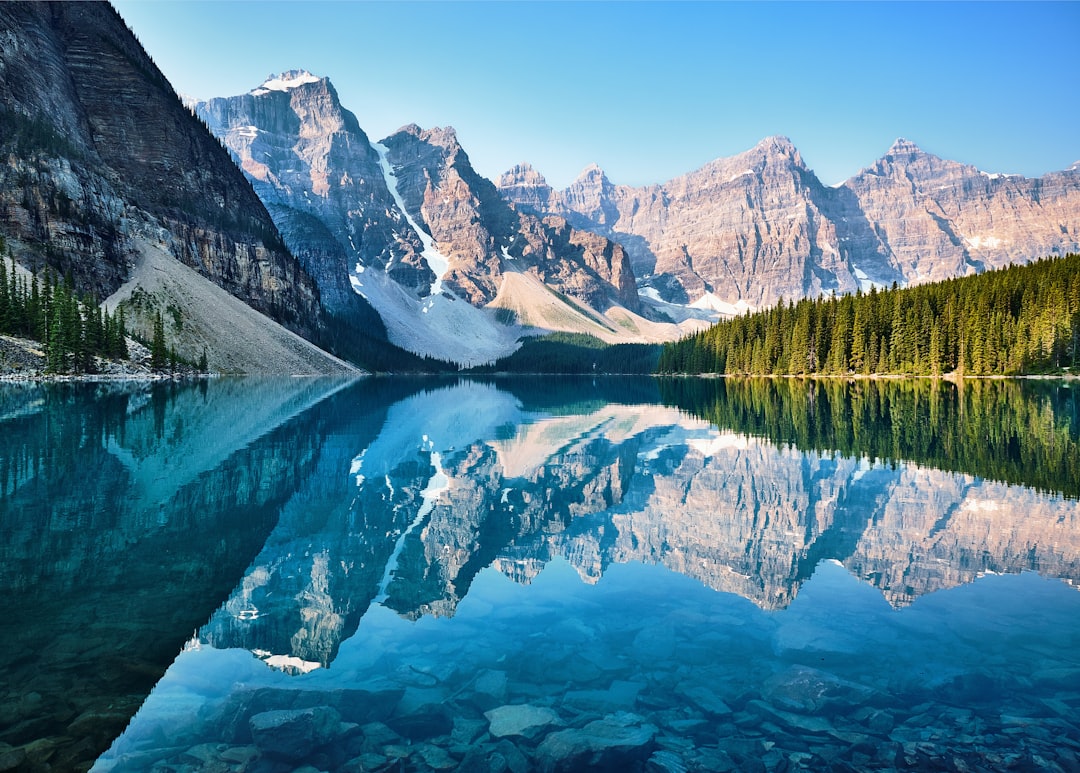
It started as a rumor on social media, a single screenshot shared a thousand times, and it spread faster than a summer storm across the lake. By the time Canadians opened their eyes on that late August morning, the question was everywhere: had Lake Ontario just been renamed? Hundreds of thousands of people reached for their phones and typed the same thing into their search bars. MapQuest. Google Maps. Apple Maps. They were not looking for directions to a coffee shop or a shortcut through the city. They were looking for the truth about a body of water that has carried one name for centuries and suddenly seemed to be wearing another.
Within hours, search interest in mapping tools across Canada had climbed by more than six hundred percent. The most searched term in the country was no longer about traffic, weather, or sports. It was about a lake, an executive order, and the quiet power of a name. Every related query told the same story: people wanted to know if the change was real, who had the authority to make it, and what it meant for the place they call home.

The Order That Shook the Great Lakes
The story traces back to Washington, where the US administration signed an executive order directing federal agencies to refer to the great lake bordering New York state and the province of Ontario as Lake America. The move followed the earlier decision to rename the Gulf of Mexico as the Gulf of America, and it sent shockwaves through communities on both sides of the border.
Supporters of the change argued that the lake, which touches American soil along its southern shore, deserved a name that celebrated the whole continent rather than a single region. They claimed the word America could unite the waterway under one banner and simplify geography for Americans who rarely think about the international line that runs through the middle of the lake. A few prominent voices even insisted the lake should be celebrated as an American treasure, and they framed the rename as an act of patriotic pride.
Critics called the order a publicity stunt and a dangerous game with shared history. For Canadians, the announcement felt deeply personal. Lake Ontario is not some distant body of water that appears only in textbooks. It anchors the country’s most populous province, gives the entire region its name, shapes its weather, powers its shipping lanes, supports its fishing communities, and fills the glasses of millions who drink from its depths every single day. The lake is woven into the daily rhythm of Canadian life in ways that a distant president may never fully understand.

Can One Country Rename a Shared Lake?
The legal question quickly became the most searched aspect of the entire story. Can the president of the United States simply rename a lake that Canada also calls its own? The honest answer is complicated, and that complexity is exactly why so many people flooded map applications looking for clarity.
Lake Ontario is a binational lake, one of the few large waterways on Earth that belongs equally to two countries. The international boundary between Canada and the United States runs through its waters, meaning no single government holds the keys to the whole lake. The southern shore belongs to New York, while the northern and western shores belong to Ontario. Roughly half of the lake’s shoreline faces American soil and the other half faces Canada, and both nations depend on the water for drinking, transport, recreation, and trade.
What the executive order can do is change how American federal agencies refer to the lake in official documents, nautical charts, and national maps. It cannot force Canada to adopt the new name. It cannot erase the word Ontario from the province’s identity, and it cannot change the name on the Canadian side of the water. International naming disputes rarely end with one country simply declaring victory, because names on shared maps are supposed to be negotiated, not dictated.
Cartographers and legal scholars pointed to decades of precedent. When countries disagree about a shared geographic feature, the common practice is to use local names and to respect the terminology of each nation. A map produced in Toronto will show Lake Ontario. A map produced in Washington might show Lake America on the American side. The water itself does not change. Only the label does, and labels, unlike lakes, can be challenged, ignored, or quietly abandoned.
Many Canadians took comfort in the details of the order, which technically applies only to American federal use. State and local governments, private companies, and everyday citizens are not bound by it, and mapping services usually follow regional settings rather than political declarations. Still, the uncertainty drove people to their screens, because nobody wanted to wake up one morning and discover that their favorite lake had been renamed while they slept.
What Does Ontario Mean Anyway?
The debate also pushed a quieter question into the spotlight: where did the original name come from, and why does it matter? The answer led thousands of curious Canadians down a rabbit hole of history that they had never bothered to explore.
Ontario comes from the Wendat language, spoken by the Wendat Nation, also known in older texts as the Huron people. The word ontarí:io is often translated as beautiful lake or sparkling water, a poetic description that perfectly captures the shifting blues and silver light of the lake’s surface. Some scholars suggest the word can also mean great lake, which makes the irony of the current dispute impossible to ignore.
The people who lived beside this water long before the border existed gave it a name of beauty and reverence. To replace that name with a political label, many argued, would erase a thread of Indigenous heritage that stretches back centuries. Search queries about the Wendat Nation and the true meaning of the word Ontario climbed steadily through the week, as Canadians rediscovered a piece of their own story that they had never thought to question. The lake, it turns out, has always been more than a map label. It is a living memory.
Canada Answers Back
The political response from Canada was swift and unmistakable. Provincial leaders took to television and social media within hours of the announcement. The premier of Ontario made it clear that the province would continue to call the lake by its rightful name, and he offered to take the American side on a boat tour of the disputed waters so they could see for themselves what they were trying to rename. The playful offer captured the mood of a country that was amused, annoyed, and completely unwilling to budge.
Even leaders from provinces far from the lake joined the chorus. The premier of Alberta appeared on an American business network to defend the name Ontario and to warn that Canadian patience with unilateral renaming had run thin. Her appearance drew massive attention at home, where viewers were surprised to see a prairie premier championing a Great Lakes cause so passionately. It was a reminder that the lake belongs not just to Ontario, but to the Canadian imagination as a whole.
Musicians joined the conversation too. The beloved Canadian band Blue Rodeo, whose wistful song Lake Ontario has become an anthem of homesickness and memory, suddenly found its name everywhere. Fans streamed the track and shared its lyrics across social platforms, while singer Jim Cuddy joked in interviews that no executive order could ever rewrite what the lake means to the people who grew up on its shores. The song became a quiet act of resistance, a musical proof that names live in hearts long after they are printed on paper.
The Great Digital Map Check
And then came the part that nobody predicted: the mapping apps. When reports surfaced that some American users were seeing the label Lake America appear on their screens, Canadians everywhere opened their own maps to check. The search for MapQuest, the classic navigation service that many had not touched in years, exploded overnight. People wanted to compare the platforms. They wanted to see whether the American name had quietly crept into the Canadian versions of the same tools.
The searches revealed a curious side story. Some of the most popular related queries had nothing to do with geography at all. Hydro One, the electricity utility that serves Ontario, suddenly appeared in the same search clusters, because worried residents who saw the words outage map in their feeds assumed the lake renaming had something to do with their power. Queries for the Hydro One outage map spiked as confused customers tried to figure out whether a blackout had struck the region or whether the news was simply about a name on a chart.
Map providers responded cautiously. Most mapping services use regional settings to decide which names to display, so a person searching from Toronto is likely to see Lake Ontario while a person searching from upstate New York might see a different label depending on how the company applies federal guidance. That inconsistency confused people further and drove even more searches, creating a loop that kept the topic at the top of national trends for days. Apple Maps, Google Maps, and MapQuest all became battlegrounds in a war fought entirely with place names.
Curious searchers also looked up the Welland Canal, the engineering marvel that links Lake Ontario to Lake Erie and allows ships to bypass Niagara Falls. The canal carries billions of dollars in trade every year, and it reminded people that the lake is not just beautiful, it is useful. It moves goods, feeds families, cools cities, and connects communities. A name cannot do any of that. Only the water can.
What the Maps Cannot Change
When the dust settles, the maps will tell a complicated story, and that is exactly the point. Names are powerful because they carry memory, identity, and belonging. But no line drawn by a president and no update pushed by a tech company can change the fact that this lake is shared, that its shores hold the homes and histories of two nations, and that its water has been called beautiful since long before either country existed.
Canadians may laugh at the order, argue about it in comment sections, and challenge it in every forum available. But they will also keep drinking the water, keep singing the songs, and keep calling the lake what it has always been called. A name is a label, but a lake is a living thing, and living things do not change just because someone decides to write something different on a map.
The next time you open a navigation app to check the name of the water beside Toronto, remember that you are taking part in something older than any app, any president, or any border. You are part of the long conversation about who gets to name the world we share. And for now, on the Canadian side of the line, the answer is still clear. It is Lake Ontario, the beautiful water, and no amount of scrolling will ever change that.
